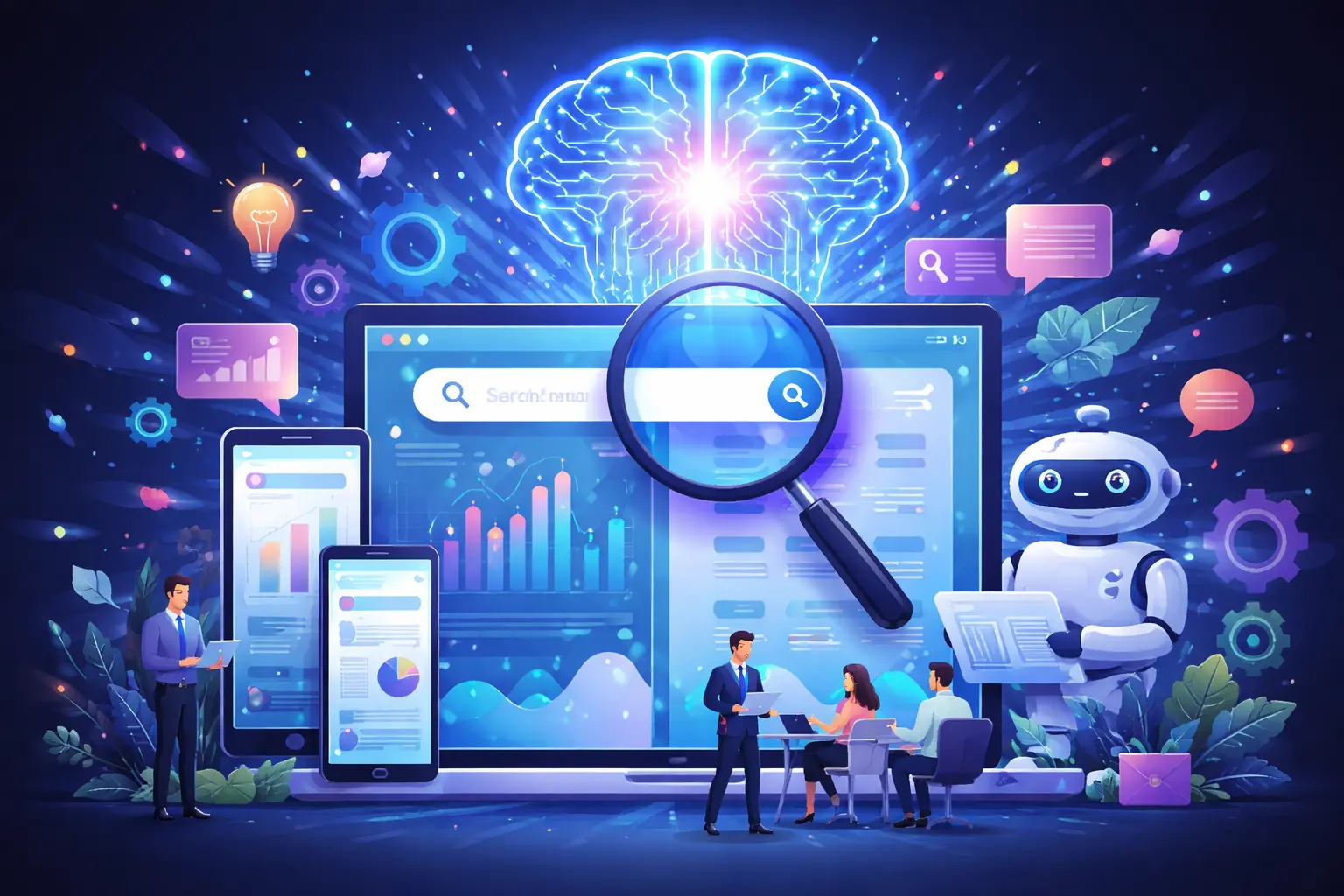

Search Engine Optimization (SEO) has always evolved alongside search technology. From early keyword stuffing to sophisticated content strategies, the goal has remained the same: help people find the information they need. Today, however, the biggest shift in SEO is being driven by artificial intelligence (AI).
AI is transforming how search engines understand content, how marketers create it, and how users discover answers online. For businesses, this means that traditional SEO tactics alone are no longer enough. The future of SEO is increasingly shaped by intelligent systems that prioritize relevance, context, and real user value.
Let’s explore how AI is reshaping the SEO landscape and what businesses can do to adapt.
Search Engines Are Now Powered by AI
Search engines have moved far beyond simple keyword matching. Today, platforms like Google rely heavily on AI systems to interpret search intent and deliver more accurate results.
Algorithms using machine learning and natural language processing (NLP) allow search engines to understand:
-
The meaning behind queries
-
Context and user intent
-
Relationships between topics
-
The quality and relevance of content
Instead of asking “Which page contains this keyword?”, search engines now ask:
“Which page best answers the user’s question?”
This shift means SEO is less about manipulating rankings and more about creating useful, trustworthy, and well-structured content.
AI Is Changing How Content Is Created
AI-powered tools can now assist with content creation, research, and optimization. Marketers use AI to:
-
Analyze keyword opportunities
-
Identify content gaps
-
Generate topic ideas
-
Optimize headlines and structure
-
Improve readability
However, while AI can help scale content production, human expertise remains essential. Search engines are increasingly prioritizing content that demonstrates experience, authority, and credibility.
Businesses that rely solely on automated content without adding real insight often struggle to rank.
The most effective approach is AI-assisted content creation combined with human expertise.
Search Intent Is More Important Than Keywords
In the past, SEO strategies often revolved around specific keywords. Today, AI allows search engines to understand the broader intent behind a search.
For example, when someone searches:
“Best moving company near me”
Search engines analyze signals such as:
-
Location
-
Reviews
-
Business reputation
-
Website quality
-
Content relevance
Simply inserting the phrase “best moving company” into a page multiple times will no longer improve rankings. Instead, businesses must provide clear answers, trustworthy information, and helpful resources.
AI Is Creating a New Type of Search
One of the biggest changes happening right now is that people are no longer searching only on traditional search engines. Increasingly, users are asking questions directly inside AI assistants and conversational platforms.
Tools like ChatGPT, Claude, and Grok are becoming discovery platforms where users ask questions and receive curated answers instead of browsing multiple websites.
For example, a real estate professional might ask an AI assistant:
“What texting tools work with real estate CRMs?”
Or a moving company owner might ask:
“What software helps moving companies capture website leads and automate follow-ups?”
Instead of scanning dozens of websites, the AI assistant may recommend tools such as Voizee directly within the response.
Because of this shift, companies are focusing more on publishing valuable educational content, industry guides, and integration documentation so that AI systems can reference their information when generating answers.
For example, content about:
-
communication tools for real estate teams
-
automation for moving companies
-
lead capture strategies for service businesses
helps platforms like ChatGPT, Claude, and Grok understand what a company does and when it should be recommended.
In other words, the future of SEO is not just about ranking on Google — it’s about being visible inside AI-generated answers.
Technical SEO Is Becoming More Important
AI-driven search engines evaluate more than just content. They also analyze the technical performance of websites, including:
-
Page speed
-
mobile usability
-
structured data
-
internal linking
-
site architecture
A well-structured website helps search engines understand the relationships between pages and improves the chances of appearing in rich search results.
Data and User Behavior Are Driving Rankings
AI systems learn from user behavior signals such as:
-
Click-through rates
-
Time spent on a page
-
Bounce rates
-
engagement levels
If users consistently interact with a page and find it helpful, search engines interpret that as a sign of quality.
This means SEO is increasingly connected to overall user experience, not just keywords.
What Businesses Should Focus on in the AI Era
As AI continues to reshape search, businesses should focus on a few key principles:
Create helpful, original content
Content should solve real problems and answer real questions.
Build authority in your niche
Search engines reward expertise and trustworthy information.
Optimize for user intent
Think about what the searcher actually wants to accomplish.
Improve technical performance
Fast, mobile-friendly websites are essential.
Use AI as a tool, not a replacement
AI can assist with research and optimization, but human insight creates value.
The Future of SEO
AI will continue to evolve how search engines interpret content and deliver results. In the future, SEO will likely become even more focused on:
-
content quality
-
topical authority
-
real-world expertise
-
user experience
Businesses that embrace these changes will benefit from stronger visibility and more meaningful connections with their audiences.
Rather than viewing AI as a threat to SEO, the best approach is to see it as an opportunity to create better content and deliver more value to users.
In short: AI is not replacing SEO — it is expanding it. Businesses that build valuable, trustworthy content will become visible not only in search engines, but also inside the AI systems people increasingly rely on for answers.